
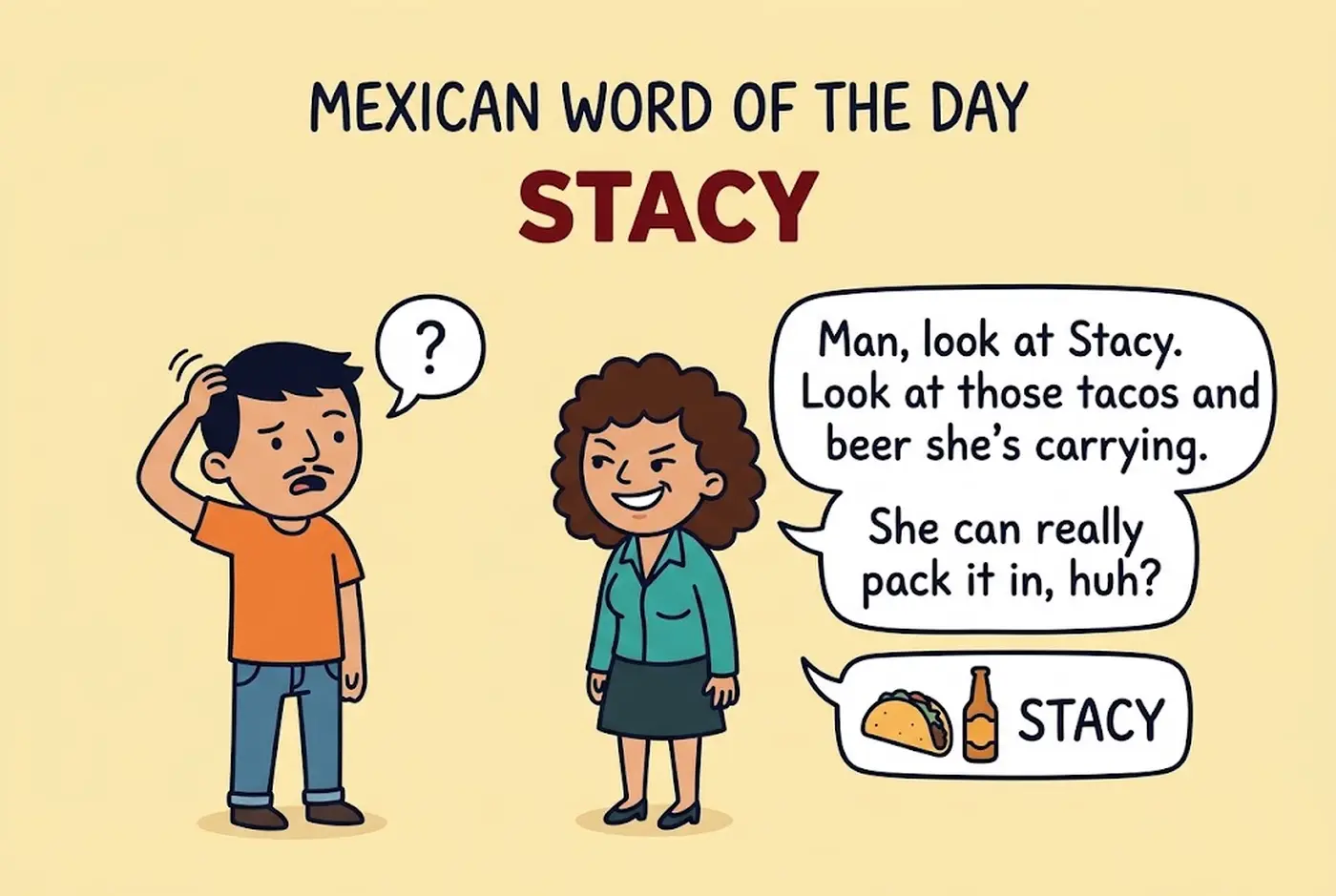
Mexican word for the day jokes turn everyday Spanish vocabulary into quick laughs, clever captions, and memorable wordplay. Why study a new word when you can learn one and laugh at the same time?
These jokes use familiar Spanish words, simple translations, and playful twists. They’re designed for language learners, Spanish speakers, teachers, families, and anyone who enjoys a good pun.
The humor stays light and respectful while celebrating Spanish vocabulary and Mexican-inspired wordplay. Ready to add a little laughter to your vocabulary?
Funny Spanish Word of the Day Jokes
Learning Spanish gets much more entertaining when every new word comes with a punchline. So, why not turn vocabulary practice into a mini comedy session?
- Hola means hello. I said it twice, just to make sure we were still on speaking terms.
- Adiós means goodbye. It’s the Spanish word for “I’m leaving before another joke starts.”
- Gracias means thank you. Gracias, vocabulary, for giving me something to laugh about.
- Amigo means friend. A good amigo always shares the last taco.
- Familia means family. Mine translates to “Who ate the leftovers?”
- Casa means house. My casa has one rule: snacks belong to everyone.
- Comida means food. That’s my favorite Spanish vocabulary category.
- Agua means water. I ordered agua and suddenly remembered I’m supposed to be responsible.
- Café means coffee. Finally, a word I can pronounce before breakfast.
- Pan means bread. Short word, big sandwich potential.
- Sol means sun. Apparently, even sunshine gets a Spanish vocabulary lesson.
- Luna means moon. She’s been working the night shift for centuries.
- Día means day. Mine usually starts after the café arrives.
- Noche means night. That’s when my best snack decisions happen.
- Amor means love. Mine speaks fluent tacos.
- Risa means laughter. That’s the vocabulary word I practice daily.
- Sueño means dream. Mine usually involves sleeping past the alarm.
- Fiesta means party. Finally, a vocabulary word with a social calendar.
- Música means music. My playlist has more Spanish words than my homework.
- Feliz means happy. Add tacos and I become extra feliz.
Pro Tip: Write one Spanish word on a sticky note each morning and add your own punchline underneath it.
Mexican Wordplay Jokes for Language Learners
Spanish vocabulary becomes easier to remember when the words connect with something funny. Why memorize silently when you can turn each word into a tiny joke?
- Buenos días means good morning. Mine begins when someone says, “Coffee?”
- Buenas noches means good night. My brain says it; my phone says, “One more video.”
- Por favor means please. I say it whenever I see the last taco.
- De nada means you’re welcome. It also means I accept payment in snacks.
- Perdón means sorry. I use it after stealing the last cookie.
- Sí means yes. My favorite answer to “Want dessert?”
- No means no. Unless someone asks, “Want another taco?”
- Ahora means now. My favorite time to eat.
- Mañana means tomorrow. My favorite day for starting diets.
- Siempre means always. Like always ordering dessert.
- Nunca means never. I never say no to churros.
- Mucho means a lot. I use it to describe my snack order.
- Poco means a little. “Just a poco” is how every snack order begins.
- Rápido means fast. That’s how my plate disappears.
- Lento means slow. That’s how I walk past the dessert table.
- Grande means big. My appetite already knows this word.
- Pequeño means small. The snack was pequeño; the craving wasn’t.
- Bueno means good. A word that works perfectly after the first bite.
- Malo means bad. My diet says tacos are malo; my taste buds disagree.
- Perfecto means perfect. Especially when someone brings extra salsa.
Pro Tip: Pair each new word with a silly sentence. The stranger the sentence, the easier it can be to remember.
Food-Themed Mexican Word of the Day Jokes
Food vocabulary makes Spanish practice especially tasty. From tacos to tortillas, these short puns give your vocabulary a flavorful twist.
- Taco needs no translation. It speaks directly to my appetite.
- Queso means cheese. Queso much fun to say.
- Pan means bread. I loaf this word.
- Leche means milk. It’s udderly useful vocabulary.
- Arroz means rice. Rice to meet you.
- Frijoles means beans. They’re bean part of my vocabulary for years.
- Maíz means corn. That word really pops.
- Sal means salt. It adds seasoning to my Spanish.
- Azúcar means sugar. Sweet vocabulary deserves extra credit.
- Dulce means sweet. A dulce word for a dulce dessert.
- Picante means spicy. My vocabulary just turned up the heat.
- Salsa means sauce. Finally, grammar with flavor.
- Limón means lemon. This word has some serious zest.
- Cebolla means onion. It brings tears to my vocabulary notebook.
- Tomate means tomato. That word is ripe for a pun.
- Chile means chili. My Spanish lesson suddenly got spicy.
- Pollo means chicken. I’m winging this vocabulary lesson.
- Carne means meat. This word really beefs up my vocabulary.
- Pescado means fish. School of vocabulary starts here.
- Postre means dessert. Finally, the most important word in the lesson.
Pro Tip: Put food vocabulary on your kitchen board. Every snack can become a Spanish practice session.
Short Spanish Translation Jokes
Translation is full of opportunities for wordplay. One simple word can lead to a punchline before you even reach the next vocabulary card.
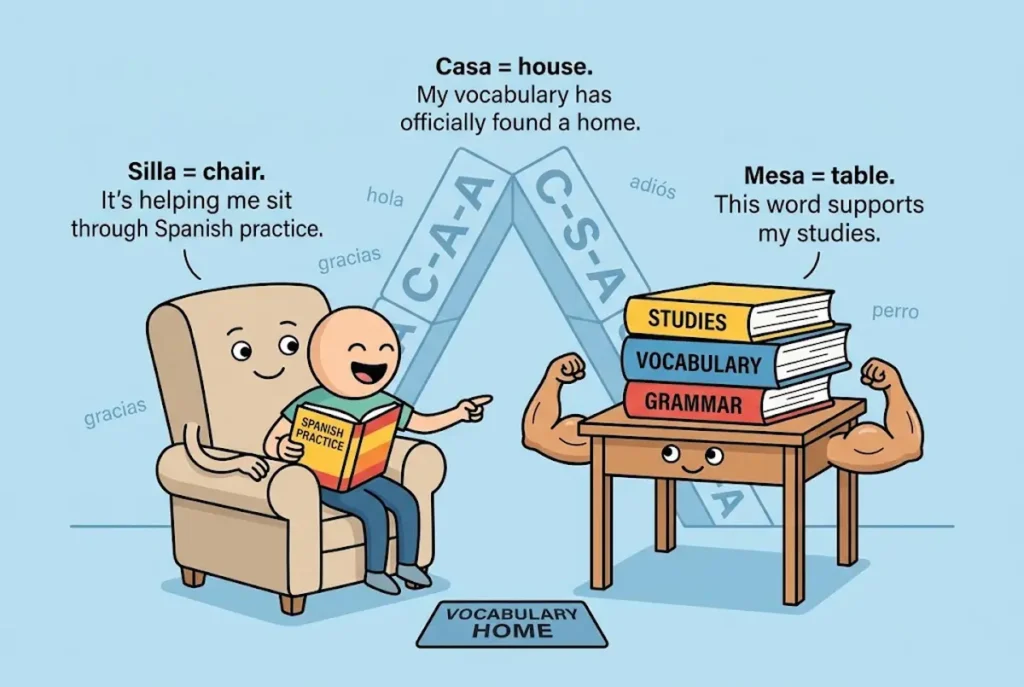
- Casa = house. My vocabulary has officially found a home.
- Mesa = table. This word supports my studies.
- Silla = chair. It’s helping me sit through Spanish practice.
- Puerta = door. A doorway to better vocabulary.
- Ventana = window. I’m looking at Spanish from a new angle.
- Libro = book. My vocabulary just got a chapter.
- Lápiz = pencil. It’s writing the next punchline.
- Papel = paper. Every good pun needs somewhere to land.
- Escuela = school. Where vocabulary and homework meet.
- Maestro = teacher. The person who knows when I guessed.
- Estudiante = student. That’s me, professionally confused.
- Pregunta = question. Spanish class has plenty of those.
- Respuesta = answer. The word I’m always searching for.
- Palabra = word. A word about words? Very efficient.
- Frase = phrase. This joke just became grammatically useful.
- Nombre = name. My vocabulary notebook finally knows mine.
- Número = number. One more word, please.
- Color = color. Spanish made my vocabulary brighter.
- Tiempo = time. And apparently I’ve spent mine making puns.
- Lugar = place. This joke has officially found its lugar.
Pro Tip: Make a translation joke from one word every day and share it with a language-learning friend.
Mexican Spanish Puns for Everyday Words
Everyday vocabulary offers endless pun possibilities. Why limit language practice to textbooks when ordinary conversations provide plenty of material?
- Amigo means friend. My amigo knows where the snacks are.
- Trabajo means work. My favorite Spanish word is still “vacaciones.”
- Dinero means money. It disappears faster than my vocabulary mistakes.
- Tiempo means time. Mine vanishes during Spanish practice.
- Coche means car. Mine needs gas and a compliment.
- Calle means street. My Spanish journey just turned a corner.
- Ciudad means city. That’s a big word for a busy place.
- Parque means park. A perfect place for vocabulary and sunshine.
- Familia means family. Also known as my unpaid comedy audience.
- Perro means dog. My perro understands every word except “bath.”
- Gato means cat. My gato understands Spanish but ignores commands.
- Casa means home. Mine has a permanent snack department.
- Ropa means clothes. My closet has no translation for “enough.”
- Zapato means shoe. Two shoes, one vocabulary lesson.
- Camisa means shirt. My Spanish lesson is dressed properly.
- Sombrero means hat. A vocabulary word you can wear.
- Llave means key. It unlocks another Spanish word.
- Teléfono means phone. Mine knows more Spanish apps than I do.
- Foto means photo. Say “queso” and you’ve combined vocabulary with lunch.
- Fiesta means party. Suddenly, homework has a better ending.
Pro Tip: Pick five everyday objects around you and learn their Spanish names. Then turn each into a one-line pun.
Clever Mexican-Inspired Spanish Word Jokes
These jokes mix simple Spanish vocabulary with familiar situations. The result? Quick laughs that work well as captions, classroom jokes, or conversation starters.
- Amor means love. My love language is “extra guacamole.”
- Amigo means friend. A real amigo saves you the good seat.
- Fiesta means party. My vocabulary just received an invitation.
- Bailar means to dance. My feet are still waiting for instructions.
- Cantar means to sing. My shower has heard my best Spanish.
- Comer means to eat. A verb I practice with dedication.
- Beber means to drink. Water counts; vocabulary experts approve.
- Dormir means to sleep. Now that’s a verb I conjugate regularly.
- Reír means to laugh. Finally, a verb with a good punchline.
- Hablar means to speak. My Spanish dictionary is getting nervous.
- Escuchar means to listen. I’m listening for the punchline.
- Mirar means to look. I looked at my homework and looked away.
- Caminar means to walk. My vocabulary journey begins one step at a time.
- Correr means to run. Usually away from difficult grammar.
- Saltar means to jump. My confidence jumps when I remember a word.
- Aprender means to learn. I’m learning one pun at a time.
- Estudiar means to study. I studied, then rewarded myself with tacos.
- Escribir means to write. That’s exactly what this vocabulary list does.
- Leer means to read. I read the dictionary; the dictionary judged me.
- Jugar means to play. Language practice just became more fun.
Pro Tip: Use these action verbs as captions for short videos, classroom activities, or language-learning posts.
More Mexican Word for the Day Jokes
The fun doesn’t stop with basic vocabulary. Spanish has plenty of short words that can inspire clever jokes, playful captions, and easy conversation starters.
Whether you’re learning Mexican Spanish or simply collecting amusing language puns, these next sections keep the wordplay moving. Which one will become your favorite?
Spanish Vocabulary Jokes for Kids
Kids learn quickly when lessons include laughter. These simple jokes use familiar words and playful situations without making vocabulary practice complicated.
- Sol means sun. The sun is always shining in Spanish class.
- Luna means moon. She works the night shift.
- Estrella means star. That’s what every good student wants to be.
- Cielo means sky. My vocabulary just went upward.
- Nube means cloud. This word is floating through class.
- Lluvia means rain. My homework needs an umbrella.
- Flor means flower. A blooming good vocabulary word.
- Árbol means tree. That word has deep roots.
- Mar means sea. Spanish vocabulary just made a splash.
- Río means river. This lesson keeps flowing.
- Pez means fish. My vocabulary is swimming along.
- Pájaro means bird. It’s flying through my word list.
- Casa means house. My vocabulary has a place to stay.
- Libro means book. Every joke needs a good chapter.
- Lápiz means pencil. It’s the sharpest student in class.
- Escuela means school. Where every word gets homework.
- Juego means game. Learning just became a competition.
- Amigo means friend. Friends make vocabulary more fun.
- Risa means laughter. Kids already know this word.
- Feliz means happy. Especially when class ends early.
Pro Tip: Turn each joke into a flashcard: Spanish word on the front, translation and punchline on the back.
Mexican Spanish Food Puns
Food and wordplay make a great combination. These short jokes are perfect for social captions, menus, classroom boards, or anyone who appreciates a tasty pun.
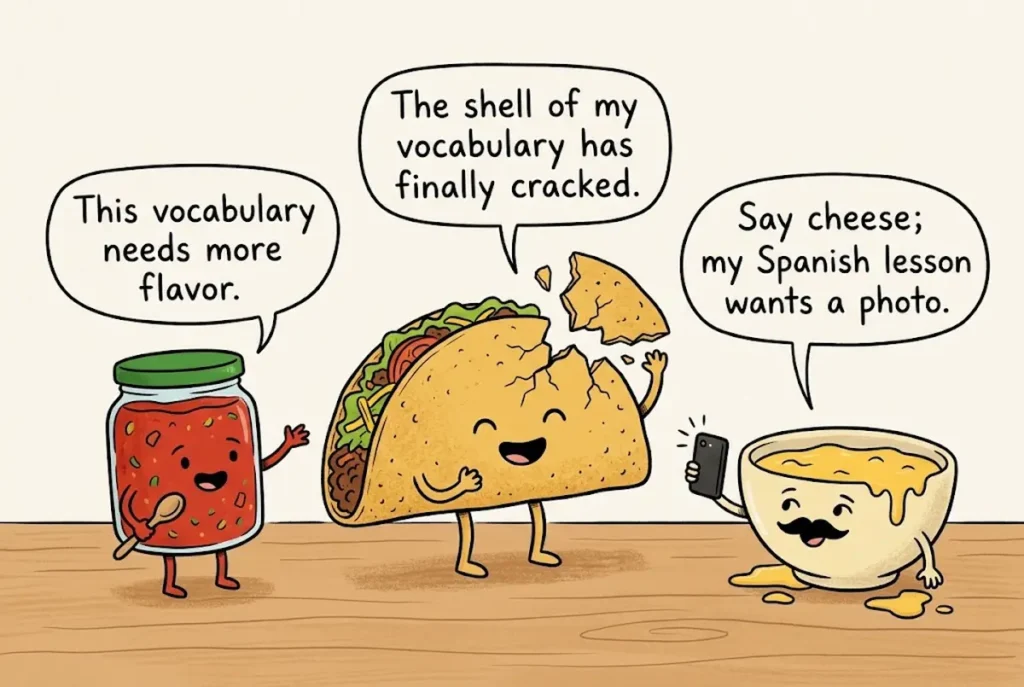
- Taco: The shell of my vocabulary has finally cracked.
- Queso: Say cheese; my Spanish lesson wants a photo.
- Salsa: This vocabulary needs more flavor.
- Tortilla: Round words deserve round applause.
- Guacamole: My vocabulary just got extra green.
- Frijoles: Beans are officially part of my word bank.
- Arroz: Rice vocabulary is a grain of knowledge.
- Maíz: Corn vocabulary really knows how to pop.
- Chile: This word turned up the heat.
- Limón: My Spanish lesson needed some zest.
- Sal: One little word can season the whole sentence.
- Azúcar: Sweet vocabulary makes studying easier.
- Dulce: A sweet word deserves a sweeter punchline.
- Picante: My vocabulary is getting spicy.
- Cebolla: One word and suddenly everyone is crying.
- Tomate: This word is ripe for comedy.
- Pollo: I’m winging the translation.
- Carne: This word really beefs up dinner vocabulary.
- Postre: Dessert is the vocabulary reward.
- Comida: The one Spanish word my stomach remembers perfectly.
Pro Tip: Use food puns as captions for recipe photos or Spanish-language cooking posts.
Funny Spanish Verb Jokes
Verbs keep conversations moving, and they also create plenty of punchlines. Here are quick jokes built around everyday Spanish actions.
- Comer: I conjugate this verb three times a day.
- Dormir: My favorite verb after sunset.
- Bailar: My feet have their own grammar rules.
- Cantar: My shower is my Spanish concert hall.
- Reír: A verb that never needs an introduction.
- Hablar: I talk; my dictionary listens.
- Escuchar: I listen carefully for dessert suggestions.
- Caminar: One step closer to fluent Spanish.
- Correr: Usually toward the taco stand.
- Saltar: My vocabulary jumped a level today.
- Aprender: One word at a time, one laugh at a time.
- Estudiar: I studied Spanish and earned a snack break.
- Leer: I read the menu with impressive fluency.
- Escribir: I write jokes because grammar needs entertainment.
- Jugar: Learning Spanish can be a game.
- Viajar: My passport wants more Spanish vocabulary.
- Comprar: My favorite conjugation happens near a bakery.
- Cocinar: Spanish class tastes better after this verb.
- Vivir: A verb that reminds us to enjoy the lesson.
- Amar: A useful verb when you love tacos.
Pro Tip: Choose one Spanish verb and write three funny sentences using different subjects.
Short Spanish Puns for Social Media
Need a caption that stands out? A Spanish word plus a quick pun can make a simple post much more memorable.
- Hola: Small word, big entrance.
- Adiós: My caption has left the chat.
- Gracias: Thank you for liking my pun.
- Amigo: Tag the friend who needs this joke.
- Fiesta: Because one word can start the celebration.
- Feliz: Happiness with four letters and one accent.
- Amor: Love is always caption-worthy.
- Taco: A caption worth shelling out for.
- Queso: Say cheese and post it.
- Salsa: Add flavor to your feed.
- Sol: Bright vocabulary for a sunny post.
- Luna: Night captions just got better.
- Café: Because every morning deserves a Spanish word.
- Dulce: Sweet caption, sweeter punchline.
- Picante: A little spice for your timeline.
- Fiesta: This caption came dressed for the occasion.
- Risa: Share the laugh.
- Sueño: Dream big, caption bigger.
- Viaje: Every trip needs a Spanish pun.
- Vamos: The perfect word for “let’s post this.”
Pro Tip: Keep Spanish captions short, then add the English translation or punchline for broader engagement.
Mexican Spanish Language-Learning Jokes
Language learning takes practice, but practice doesn’t have to be dull. These jokes make vocabulary review more playful while keeping the Spanish words front and center.
- I learned hola today. My social life is officially upgraded.
- I learned gracias. Now I can thank everyone for correcting me.
- I learned por favor. It’s useful whenever I need another taco.
- I learned amigo. Now my vocabulary has a friend.
- I learned familia. My entire house is now homework.
- I learned comida. Suddenly, Spanish class made sense.
- I learned agua. My vocabulary is staying hydrated.
- I learned café. Finally, a word that understands mornings.
- I learned casa. My vocabulary has moved in.
- I learned escuela. My homework followed immediately.
- I learned libro. It contains more words than my brain requested.
- I learned palabra. Now I can talk about words while learning words.
- I learned pregunta. Spanish class immediately gave me five.
- I learned respuesta. Finding it is still the hard part.
- I learned rápido. My teacher immediately started speaking rápido.
- I learned lento. My pronunciation appreciates this word.
- I learned feliz. That’s how vocabulary practice should end.
- I learned risa. Then I started making these jokes.
- I learned fiesta. Suddenly, studying has a weekend plan.
- I learned vamos. Now I’m ready to continue.
Pro Tip: Keep a “funny vocabulary notebook” and add one Spanish word, translation, and joke every day.
Best Mexican Word for the Day Jokes to Share
Here’s the final collection of quick favorites. They’re short enough for texts, captions, classroom slides, greeting cards, or a quick laugh with friends.
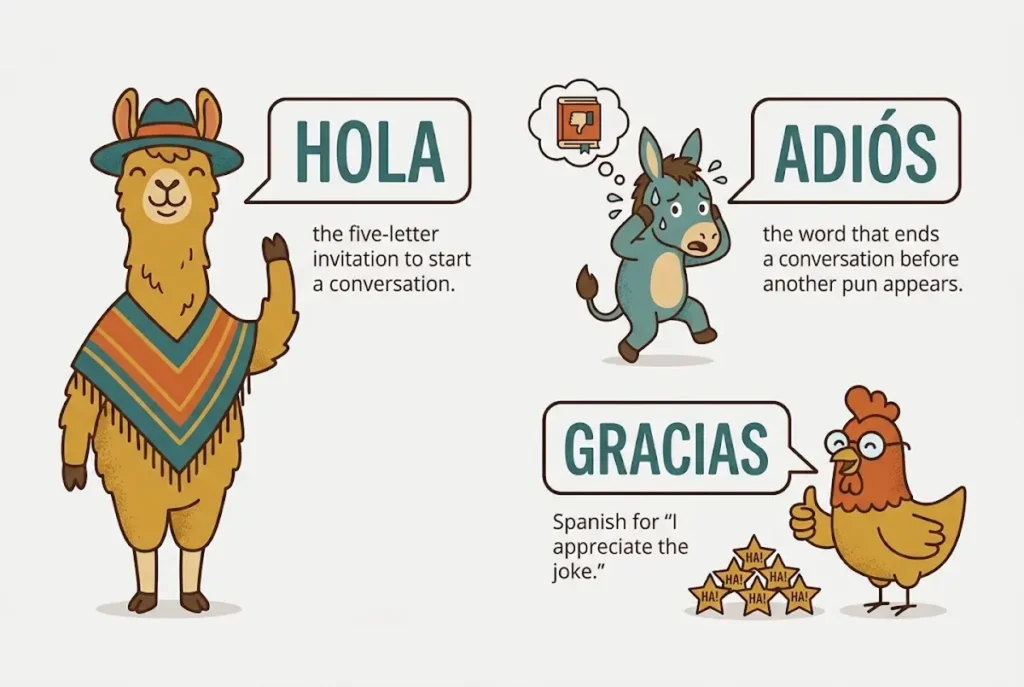
- Hola — the five-letter invitation to start a conversation.
- Adiós — the word that ends a conversation before another pun appears.
- Gracias — Spanish for “I appreciate the joke.”
- Amigo — the person who shares your snacks.
- Familia — the people who know every embarrassing story.
- Casa — where the snacks mysteriously disappear.
- Comida — vocabulary your stomach never forgets.
- Taco — a folded lesson in deliciousness.
- Queso — the dairy word that always gets a photo.
- Café — the vocabulary word that wakes up first.
- Sol — the brightest word in the dictionary.
- Luna — proof that vocabulary can work the night shift.
- Fiesta — the word that makes studying sound like a celebration.
- Feliz — a word worth practicing every day.
- Risa — the best response to a good pun.
- Amor — the word that gives every sentence a little warmth.
- Dulce — a sweet word for a sweet joke.
- Picante — vocabulary with a little heat.
- Vamos — Spanish for “let’s keep the jokes coming.”
- Perfecto — exactly what you say after finding your favorite pun.
Pro Tip: Screenshot your favorite joke and share it as a daily vocabulary post. Better yet, tag someone who is learning Spanish.
Conclusion
Learning a language becomes much more memorable when vocabulary comes with laughter. These Mexican word for the day jokes turn everyday Spanish words into quick jokes that are easy to remember, share, and enjoy.
From hola and gracias to taco, queso, fiesta, and feliz, every word offers another chance for clever wordplay. Why settle for memorizing vocabulary when you can laugh your way through it?
Which Spanish word made you laugh the most? Share your favorite joke in the comments, send one to a Spanish-learning friend, or post it on social media. And if you have a Mexican Spanish word that deserves its own pun, drop it below!
Frequently Asked Questions (FAQs)
What are Mexican word for the day jokes?
Mexican word for the day jokes are short jokes and puns built around Spanish vocabulary commonly used in Mexico. They combine a word, its meaning, and a playful punchline.
Are these jokes suitable for Spanish learners?
Yes. Most use beginner-friendly Spanish vocabulary with simple English explanations, making them useful for casual language practice.
Can I use these Spanish puns in a classroom?
Absolutely. Teachers can use them as warm-up activities, vocabulary prompts, flashcards, or quick conversation starters.
Are these Mexican Spanish jokes?
They are primarily vocabulary-based Spanish puns with words commonly heard in Mexican Spanish. Spanish usage can vary by country and region, so some words may be familiar across the Spanish-speaking world.
What is a good Spanish word for a daily joke?
Hola, amigo, taco, queso, fiesta, feliz, and gracias are excellent choices because they are recognizable and easy to turn into short puns.
Can I use these jokes for social media captions?
Yes. Their short format works well for Instagram captions, Facebook posts, TikTok text overlays, Pinterest graphics, classroom posts, and messages.
How can I make my own Spanish word jokes?
Choose a Spanish word, learn its meaning, identify a familiar English phrase or pun connected to it, and finish with a short punchline. Keep it simple and easy to understand.
Why are vocabulary jokes useful for language learning?
Humor can make vocabulary more memorable because it connects a new word with a memorable situation. A quick laugh can give a learner another reason to recall the word later.
